“Do enough sit-ups, does not matter who you are, you will hurt your discs.” ~ Stuart McGill

BLOG
So many of my clients have issues with being able to pronate (flat arch) their feet, either one foot or both feet. This is usually due to the misconception that pronation is BAD. Pronation is NOT bad, as long as you are able to control the pronation and move from supination (high arch) to pronation and back to supination. The problem comes when you are STUCK in either pronation or supination. Then there is work to be done.
Often the problem of being stuck in pronation results in being given orthotics to wear. The problem I have with this is that now instead of being STUCK in pronation, you will be STUCK in supination due to the orthotics, neither which are useful to you.
The best way to deal with feet that are STUCK is to reconnect with them and put them through the ranges they were designed to achieve, slowly reminding the brain that it can access these ranges of movement.
The inability to pronate or supinate can have massive negative effects further up the kinetic chain. You definitely want to get assessed and make sure your feet are propelling you through life and not slowing you down!
Here is a modified hanging version where your feet are on the ground. If you have the strength to do it from a bar with feet off ground, go for that version.
Hanging is a great way to achieve healthy shoulders, I've noticed a massive improvement in my own shoulder/neck region where I have a history of injury. Over the past few months I have incorporated a mixture of passive; active and dynamic hanging into my training along with spending a lot more time on the rings working pullups; front & back lever regressions and lat activations. Not only has my once often rigid neck/shoulder region softened up but my grip strength has become symmetrical and increased in strength. My grip strength used to be about 36kg on my Right and 32kg on my Left (side of old injury and non-dominant side) and now is an equal 40kg each side.
You don't always have to do endless amounts of traditional external and internal rotator resisted exercises to achieve strong shoulders...in fact, if this is all you are doing you may need to find yourself another practitioner. Your shoulders need to be ready for life and in life we move in many ways and put our shoulders under all sorts of stresses and loads. You need to ensure you have optimum mobility and back this up with a good foundation of reactive stability in order to keep your shoulders healthy in the long term.
My training has also included plenty handstand practice (working my line against the wall); Turkish Get Ups - these too have improved massively, 6 months ago 8kg was the max I felt comfortable with on my Left and now I am an equal 14kg for at least 1-2reps comfortably and the Left feels just as strong as the RIght. Various other cable & kettlebell stabilisation and strength exercises have also formed part of my training.
For a more in depth read about hanging click on this link to Ido Portal's blog on hanging.
Of course, if you have a shoulder injury or have limitations in your shoulders please get assessed first before jumping into anything new.
It is no secret that excessive use of high heels will lead to not only foot and lower leg conditions but it will have a negative impact throughout the whole body. Walking in high heels shifts the natural posture of your spine and creates an increased lumbar lordosis (natural curve in the lower back). It also shifts excess weight into the knees and does not allow your calf muscles to elongate fully back to their natural length, therefore creating a shortened position of the calf muscles over time. Not to mention the changes in the feet from being scrunched and jammed into tiny shoes that are usually quite narrow towards the forefoot.
Some of the common conditions that develop as a result of wearing high heels too often.
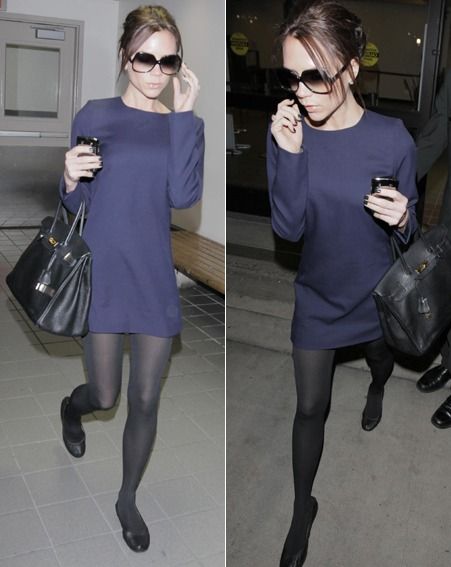
Even Victoria Beckham has hung up her high heels in exchange for more natural footwear.
More and more celebrities and ladies alike are moving towards flat shoes to save their overall health. Read more about it here. Just disregard the part in the article where Doctors suggest a one or two inch heel. This is rubbish and makes no sense!
Barefoot is how I spend most of my time these days. I am lucky enough to work in my own studio space where myself and all my clients remove their shoes as they walk in. The best footwear you can have is none at all.
If you are looking to wean yourself off the heels and try to return yourself to a more natural state of being then here are a few suggestions to get the ball rolling:
1. Spend more time barefoot
2. Invest in some comfortable flat footwear that will compliment your usual attire
3. Spend time every day rolling out your feet...instructions can be found here
4. Find confidence in who you are without feeling you need heels to achieve this
5. Date a shorter guy ;-p
If you need help with your posture or suffer from foot or leg pain, whether or not you are a high heel victim, then we can assess you and design a specific programme that you can carry out at home to move you out of pain.
I love nothing more than when a client has a lightbulb moment. I live for these moments! Here is one from yesterday:
Client: “I’m not sure if it was right but when I was carrying my shopping home yesterday I tried to focus on keeping my shoulders drawn down and gently squeezing my arm to my side like we have been doing in the exercise you get me to do. I noticed that my shoulder that usually aches a lot after my shopping trip was fine yesterday and thought I’d ask if I was doing the right thing?”
Me: “Hell yeah, you were doing the right thing! That’s what I like to call body awareness, AKA progress! That is EXACTLY what you should be doing every time you carry anything.”
Client: “Ah, I thought it must have been right as my shoulder didn’t hurt”.
The scenario ended with a HIGH 5! ☺
When we make our bodies more aware of good movement patterns and enforce it as a habit that is where CHANGE occurs! Those “AHA” moments are way more effective if the client is taught the biomechanics of a movement, along with the FEEL of it. These movement patterns are then trained and re-inforced in session. When this translates to their lives and they begin to make connections between WHY we are doing what we are in the gym and how it translates to their lives it is hugely empowering for each individual. It doesn’t always make sense when explained during sessions until the connection is made outside of the gym through body awareness.
I always try and train my clients for LIFE, to prepare them for whatever life throws at them and in order for them to achieve functional and pain free lives. Everything we do in-session has a purpose and a direct translation to their necessary function through life, whether it be through sport; certain hobbies; achieving basic pain free functional movement patterns or just being ready for the unpredictable!
Picture 1 = Anterior Pelvic Tilt
Picture 2 = Neutral Pelvis
I have my finger on my Anterior Superior Iliac Spine (ASIS/most antierior bony prominence at the front of your pelvic bone) & my thumb on my Posterior Superior Iliac Spine (PSIS/bony prominence at back of pelvis, usually where your dimple is), when these two points are level, you are in a neutral pelvic position.
I wanted to bring attention to the fact that there is a difference between causing a flexed position in the lumbar spine (lower back) and creating a neutral position at the pelvis. When your pelvis is in a neutral position, it doesn't necessarily mean that your lumbar spine is going to be in a flexed position.
I say this because I often find that people who have a history of lumbar disc bulges or herniations seem to perceive a neutral pelvic position as lumbar flexion. They also tend to be afraid of moving their pelvis out of an anterior tilt as they use it as a protective mechanism to avoid lumbar flexion.
The main issue I have with this is that although a flexed lumbar spine (particularly under load) causes disc compression, so does an excessive anterior pelvic tilt, not only does this alter the pressure at the discs but it also causes Sacroiliac Joint (SIJ) compression & encourages core instability. The majority of people who have excessive anterior pelvic tilts also have dysfunctional glutes (glute activation decompresses the SIJ). One of the roles of your glutes is to create a posterior tilt of the pelvis. If you never let your pelvis move out of anterior tilt then you are disabling your glutes (compare the above two pictures again and tell me which one can you see more glutes in) and you can probably add obliques; abdominals; TvA to that dysfunctional list too. You can tell by the creases of my top that in the first picture on the left my abs are stretched and elongated and in the picture on the right, they are contracted. Stretched abs = unprotected and compressed lower back!
Your body will find stability where it can if it is lacking and this can be in the form of SIJ compression due to dysfunction in your core musculature. Make sure you aren't forcing yourself into anterior tilt, whether under load (lifting or pushing weight) or not but working on pelvic stability instead so you know where neutral is.
Don't feed a habit...CHANGE a habit!