BLOG

HOW YOU MOVE IN THE GYM = HOW YOU MOVE IN LIFE

Online Fitness Training & Movement Rehab by a Qualified Physiotherapist & Personal Trainer.

So you've started up a new gym routine, you've got the gear, you've got the motivation and you've got the gym membership. Just don't leave the knowledge required to train you safely and effectively at the door!

You may have a Personal Trainer, but not all Personal Trainer's are created equal. Some can push you to the point of injury and beyond. If your Personal Trainer is letting you repeat a poor movement habit without correcting you over a period of time, this can create dysfunction in your body and those movement habits stay with you for life if not changed. Inevitably, leading to injury further down the track. If you have a Personal Trainer, make sure they have a lot of knowledge on the human body and movement and not just a PT certification as this is not enough to train people safely.

It's not all about Personal Trainers though, you may be training yourself and that's great! Just make sure you aren't performing poor movement habits. It is worth educating yourself on proper movement technique for all basic movements such as squats; lunges; pull-ups; pushups etc before going crazy at the gym.

I've spent a lot of time in different commercial gyms and have seen a whole lot of poor movement. You know that person is inflicting harm on themselves and they probably don't even know it YET. 

When it comes to FOOTWEAR, less is more! When it comes to EXERCISE CHOICE, there are too many variables influencing this, but you always want to include functional, full body movements in your workout. And when it comes to WHY, well this is where it gets fun, as really it comes down to what your flexibility is like; where your strength is at; what your goals are; how you feel on the day - so many variables that affect WHY you choose certain movements over others.

If you find yourself stuck in a rut with working out or are unsure how to put workouts together for yourself then consider joining our Your Moov strength program. Where we program all your workouts for you so you can spend more time training & less time thinking.

You won't regret it!

Read More

YOUR CHILD'S IPAD POSTURE

Examples of good and bad postures for kids on Ipads.

poor posture on ipad kids.jpg

With Ipads and phones being the "norm" for entertainment in the very young generation these days we need to take care with how we allow our kids to sit and watch screens. Of course we also need to monitor how long we allow them to be idle for watching screens and what it is they are actually watching or playing.

As well as this though, the posture in which we allow our kids to sit in for prolonged periods of time can be detrimental to their health! Many kids will land up in a slumped forward posture (as seen above), this can put a lot of strain on the back, creating a rounded upper back and forward head posture! 

Or even worse!...

poor posture on ipad kids 2.jpg

These poor postures can carry through to adulthood if not addressed at an early age. It is much harder to out-train poor posture as an adult...although not impossible! ;-). Best to teach them young and engrain the brain from early on.

The best thing we can do to ensure our kids don't develop poor musculoskeletal habits is to encourage them to MOVE! This may be whilst they are using ipads or phones, there is no reason why they can't keep changing postures whilst using the devices. In fact, changing postures every 5-10 minutes will be the best thing for them!

Here are a few examples of good Ipad watching postures:

This prone (face down) posture encourages extension of the back and can promote a healthy spine.

good ipad posture kids.jpg

Why not prop up the ipad or phone on a table and have your child sit on the floor with their back nice and tall so they can view the ipad with a neutral back and neck posture.

Depending on the height of the table they could be sitting/tall kneeling/standing with the ipad on the table.

Read More
Back Pain, Educational Mary Whaling Back Pain, Educational Mary Whaling

THE FUNDAMENTAL FLAWS OF CROSSFIT

crossfit flaws rehab trainer Adelaide and Gold Coast.jpg

Dr Stuart McGill, an expert on spinal health, brought up some valid points in this article - https://www.t-nation.com/training/doctors-view-of-crossfit

Here is my opinion:

I had previously been involved in crossfit for about 4 years, mostly training myself and competing in local comps, I joined a box (cross fit gym) for 6 months and then stopped crossfit altogether. This was long before there was a box on every corner and the words “wod”, “snatch” and “kipping” were so commonly known. I’ve seen a lot of different boxes and coaches and experienced them first hand as well as from a distance. I’ve also watched many a crossfitter compete and train and the same pet hates rear their ugly heads each time.

I will keep this short, sweet & to the point…here is a list of my issues with crossfit:

  • Most boxes don’t assess an individual's movement capacity prior to throwing them in a class nor do they take a record of their previous injuries…therefore leaving them open to risk of injury! It is the coaches responsibility to ensure each individual is training to THEIR individual capacity and to keep them safe from harm.

  • Scaleable does not = safe…one size does not fit all, just because you scale a movement for someone does not mean that the particular movement or the combination of movements in a particular workout aren't harmful for that individual.

  • The programming is just as advertised, “random” - often unqualified level 1 cross fit coaches are programming wods and bunching together random movements that as a workout can place excessive load on certain structures which can lead to injury or cause repetitive strain.

  • Not having at the very least a basic Cert III Fitness Training qualification as a coach (Cert III is even far from enough in my opinion).

  • Not having a clue about the human body; motor control or biomechanics and being a coach…as a result not knowing HOW to correct someone’s form in a way that works for THEM or not having the ability to assess someone's movement capacity before they even start crossfit.

  • Repeating the same movement (i.e. olympic lifts; chin ups; ghd sit-ups) within an extremely high rep range (50-100 reps) is only asking for fatigue and injury to come onboard. If endurance is what you want…pick your movements carefully!

  • Don’t believe or think peeing yourself is ok during a workout…this should NOT be happening!

  • Teaching someone how to snatch/clean & press in 10mins....followed by allowing that someone to load a snatch/clean & press the next time they're in the gym and/or encouraging them to find their 1RM is irresponsible.

  • Doing complex movements at heavy weights for large amounts of reps is not good for anyones motor control or spinal health. Fatigue will set in quick and this is when injury occurs or faulty movement patterns are engrained.

  • Cheering on someone to finish a workout with horrendous form when the better thing to do is get them to stop or rest enough for their muscles to actually be able to perform the task well.

  • Cheering on someone who has just completed a 1RM of any movement with compromising form (I've seen some shockers!).

  • Focussing on the numbers (how much you can lift) over the technique.

  • Advancing people onto kipping pullups before they can actually achieve a single decent strict bodyweight pullup unassisted (it should ideally be about 5 reps strict before attempting kipping), I would argue that chin-ups are more of a complex movement and used for strength rather than endurance so should be kept as a low rep strength movement and therefore ALWAYS be strict!

  • Thinking it's cool and hardcore to push through injury or physical damage i.e. ripped hands/chunks out of shins. These things ALL affect motor control!

  • Cost of crossfit memberships are extortionate considering the quality of coaching in most boxes - cost should reflect the quality of the service…a lot of boxes have one trainer (who usually just walks around shouting “good job”; “push guys”; “you got this” & not correcting horrible form) to 15-20 crossfitters…that is unsafe in my book!

If you apply the above points to anything you will have a bunch of messed up bodies.

Read More

ROLLING PATTERNS FOR ROTATION

Rolling is a fundamental movement we all learned how to do during neurodevelopment, it is the second milestone in neurodevelopment after head control.  Rolling combines the use of the upper extremities, core, and lower extremities in a coordinated manner to move from one posture to another. This is done from prone (face down) to supine (face up) and supine to prone. 

Rolling is commonly utilised in neurological rehabilitation but is just as important and effective in any rehabilitation programme, particularly for those who have dysfunction in rotational movements or who play rotational dominant sports.  It can be used as an assessment and it is also the corrective. There are several cues to help improve someone's rolling pattern and also regressions available.

It is a great method to assess for and correct inefficient movements that involve rotation of the trunk and body; weight shifting in the lower body; and coordinated movements of the head, neck, and upper body.

Upper limb rolling begins with the eyes and head moving in the transverse/rotational plane with the body being taken along for the ride - "where the eyes go the body will follow".  Rolling can be done either leading with the upper limb or lower limb, depending on your assessment findings and needs.

Read More
Educational, How To Avoid Injury Mary Whaling Educational, How To Avoid Injury Mary Whaling

DO YOU STRUGGLE WITH PULLUPS?

Do you struggle with pullups? Maybe your Lats are failing?...

lats vs pecs pull up personal trainer Gold Coast.jpg

Did you know in order to do a full functional pullup you most definitely need your lats to be kicking in?!

Did you also know that if you are trying to execute a pullup that involves rolling your shoulders forward even slightly that you are making it increasingly difficult for your lats to engage?

Try this little exercise now:
- Place your hand under your armpit
- Making sure your shoulder is NOT rolled forward (chest open)
- Draw your shoulder blade down and squeeze your arm into your armpit
- You should feel your lat pop out into your hand
- Now roll that shoulder forward and try squeezing again

Much harder isn't it? You probably won't feel the lat pop out half as much and will struggle to connect with it in the same way you did previously.

This is what happens when you try and execute a pullup without utilising your large, powerful lats which should be doing the majority of the work. If you are over using your pecs and upper traps (which is often the case) you will only land up with neck and shoulder problems and a weak pullup.

This was the case for one of my clients. His brain was unable to locate his lats when tested using Neurokinetic Therapy and he was using his pecs and upper traps to try and gain the movement required. Much to his surprise, his pullups were a lot different after changing his motor control within the session.

Your shoulder blades should be drawn down during the pullup movement. You should start from a full hang and then draw your shoulder blades down to engage the lats and lower traps and from there comes the pull up towards the bar.

Always worth remembering: Just because you have well developed musculature doesn't always mean they will be functional.

Read More
Back Pain, Educational, How To Avoid Injury Mary Whaling Back Pain, Educational, How To Avoid Injury Mary Whaling

DO YOU GET LOW BACK PAIN WITH DEADLIFTS OR KETTLEBELL SWINGS?

hip hinge avoid lower back pain rehab trainer Gold Coast Adelaide.jpg

Perhaps you are compromising your back as a result of poor hip movement...

Studies done on low back pain show that the pain is often caused by losing the ability to move through the hips. I see this all the time in clients and always have to re-pattern their hip movement to save their backs!

Dr Stuart McGill strikes again: “This is why the hip hinge is known to be a superior movement pattern for low back pain clients. Learning to hip hinge is paramount for both injury prevention and optimal performance.”

Too right Stuart! 
Learn how to move before you learn how to be strong!

If you'd like to learn how to hip hinge correctly, check this out.

If you feel like you need to work on your hip mobility then follow one of our hip mobility videos here.

Don't sacrifice your lower back for Deadlifts or Kettlebell Swings unless the movement has been broken down and taught to you effectively and you can carry it out extremely well.

Read More
Back Pain, Educational, Wellness Mary Whaling Back Pain, Educational, Wellness Mary Whaling

LOW BACK PAIN AND MOVEMENT

Movement is the best treatment for low back pain and recovery from discectomy.
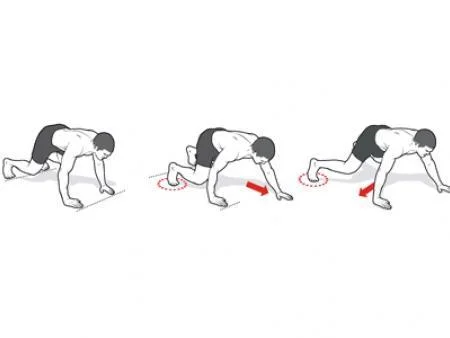
When you have chronic low back pain (or have had to have low back surgery) and seek help from a healthcare professional you should expect a thorough assessment and a tailored exercise program (at the very least) as this is the most effective way to enable you to improve your condition. 

Movement is one of the best treatments for low back pain & surgery and can get you back to feeling yourself quicker than you might know. Research has shown that carrying out a safe exercise program can get you back to daily activities and work sooner than if you don't. It also results in less days off work over the following 12 months (not that this would be very appealing to most ;-p). 

The exercises should be specific to you as a result of what was found in the assessment and not just a generic handout that is given to everyone. In the majority of cases low back pain is often brought on by lack of function of the abdominals and gluts. When you find the cause of the problem and fix that, as opposed to treating just the low back, this is when you acquire long term results. 

You should be shown how to progress through the exercises you're given in order to keep strengthening and improving your condition. Not just sent on your way with a generic program with no further progression.  

If you're only receiving hands on treatment and not given a home exercise program then you should probably find yourself another healthcare professional as this will not be enough to improve your condition long term. 

This is even more important if you've undergone surgery, as often a lot of damage is done to the muscles of the back and they will need to be retrained to function well again. Your whole body will need to be put through a program to regain function and strength again so no compensations remain. Movement is the best way to recover from low back surgery. 

Read More

CORE EXERCISE #4: CRAWLING

4th and final core exercise in our top 4...

CRAWLING:
If you are a client of mine you probably just felt a shudder down your spine...the beloved crawling pattern. You either love it or you hate it!


I personally love it as it is an awesome drill for:

  • cross-patterning
  • co-ordination
  • core stability
  • core function
  • connecting left & right brain
  • getting back to basics
  • having fun
  • mental stimulation

It also follows on nicely from the previous mentioned BIRD DOG drill, the crawling precursor.

The video demonstrates the basic crawling pattern, there are many other versions of crawling. It is a challenge to fight gravity and this is required of us on a daily basis, so why not try this cheeky little drill yourself and see what you think...feel free to comment below and share your thoughts or experiences.

Read More

CORE EXERCISE #2 : DYING BUG

2nd core exercise in our top Four...

Start the video from 1min 12secs.

DYING BUG:
This is an awesome drill for core activation. The video pretty much says it all. I use this daily with clients and it's a great follow on exercise from the previous breathing drill. Also, don't forget to BREATHE throughout this drill! Exhale as your leg is lowering. Holding your breath is a cheat ;-)
Give it a go :-)

Read More

CORE EXERCISE #1 : BREATHING

Four of my top core exercises everyone should make a part of their exercise regime...

First up is...

how to belly Breathe adelaide and gold coast rehab trainer.jpg

BREATHING:

The first being BREATHING:
Before you laugh, yes, I did say breathing!
Simple right? Not really. Most of us (myself being a culprit at times) are dysfunctional breathers, this being due to stress; injury; emotional issues; poor health etc. We breathe around 20,000+ breaths per day, that is a lot of opportunity for dysfunction.

We use our core muscles for breathing; simplified our diaphragm & pelvic floor contract together on the inhale to create Intra Abdominal Pressure (IAP), this stabilises our spine & we recruit our remaining core muscles on the exhale.

The dysfunction comes in when we either hold in our stomachs for long periods (females being biggest culprits) or start taking shallower breaths. This makes it extremely hard for normal functional breathing and requires us to recruit our neck and chest muscles with every breath.

To learn how to work on your breathing keep reading. I would highly recommend ANYONE with lower back pain to focus on their breathing especially but really EVERYONE should be doing it...

Visit our exercise library and have a read through our Stability Exercises the first 3 exercises that come up which are about BREATHING.

Read More

GET YOUR FREE DOWNLOADABLE HEALTHY TREATS RECIPE EBOOK HERE!

Sweet Little Things - Healthy Treat Recipes

This great little information packed ebook not only contains a wide variety of 12 different recipes, but also has a stack of information on the truth behind fats; how we need to form good food habits for our kids and the 10 essential ingredients you need to keep in your cupboard to always have a healthy treat option available to you. 


GET YOUR DOWNLOADABLE 6 WEEK LIFESTYLE GUIDE EBOOK. ALL YOU NEED TO GET YOU BACK ON TRACK!


ABOUT MARY

Mary is a qualified Physiotherapist & Personal Trainer who loves movement and helping others get stronger & find confidence in their bodies.

She hit Menopause at the age of 41 and struggled through the fight of Perimenopause, coming out the other side with a wealth of knowledge and a strategy for strength training that works and keeps her & her clients consistent.

She has many qualifications under her belt and focuses on helping others improve their strength; fitness and core function in a safe, guided & supported way.


Don't miss out on free, useful information available on our social networks below. I'd love to see you there!


Check out our Instagram Feed…


RECENT BLOGS


BLOG CATEGORIES