BLOG
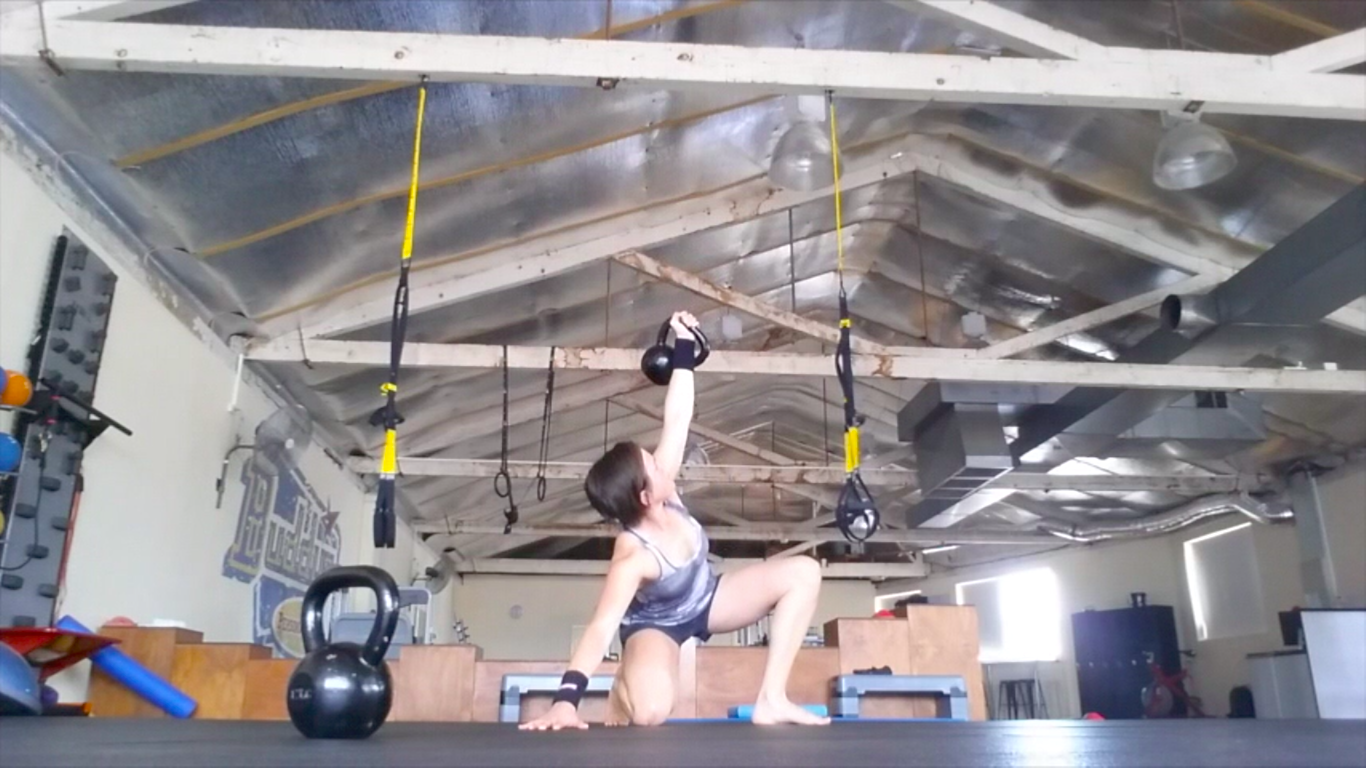
Mastering the Turkish Get Up
Are you familiar with the Turkish Get Up?
(if not, I'd recommend reading this article about the many benefits of the Get Up (http://www.strongfirst.com/the-forgotten-benefits-of-the-turkish-get-up/comment-page-1/#comments)
- Is this a movement you have tried but failed dismally?
- Is it a movement you have never seen or heard of before?
- Is it a movement you do regularly but just not sure if you’re doing it right?
- Is it a movement you have tried but you always get STUCK or experience PAIN at a certain phase?
- Is it something that you have seen someone do and thought “there is NO WAY I would be able to do that”
…Weeeellllll, THERE IS!
At MOOV we teach clients how to break down the Turkish Get Up (TGU) starting with just their body weight if needed and progress them at THEIR own pace. There is a lot to this movement that doesn’t really meet the eye and it translates over amazingly well to life. We have seen many clients on Day One unable to get from the lying down position to their elbow who now do full TGU’s with added load.
LET US MOOV YOU!
#turkishgetup #stability #mobility #movement #strength #moovwithus
The Turkish Get-Up
The Turkish Get-Up (TGU), one of my favourite movements as it requires & improves mobility; stability; strength; cross lateralisation (right brain communicating with left brain); proprioception; balance AND it feels great to do!
A client of mine who had previously been training in a group setting elsewhere had been told that she couldn’t partake in the TGU portion of the class as she was unable to do them properly. The TGU was one of her goals working with me so we started by breaking down the separate components of the TGU and teaching her brain to learn each phase of the movement using only her bodyweight. At the start she struggled with the initial phase of the TGU (going from lying on your back to propped up on your elbow). This phase requires good reflexive stability through both the Anterior Oblique Sling & Posterior Oblique Sling (Anterior - adductors; same side internal oblique; opposite external oblique & pec minor. Posterior - Lat; Thoracolumbar fascia; opposite side Glut Max).
The TGU predominantly utilises the transverse plane (rotation), taking my client back to basics by retraining rolling patterns significantly improved her initial phase of the Get-Up within the same session. We spent as long as we needed, dedicating about 5-10 minutes of each session, practising the Get-Up until I was happy she was moving smoothly enough to progress onto the next phase. All the other movements chosen for our workout session were geared at feeding the Get-Up.
Now she is able to power through the whole TGU from ground to standing with more fluidity and ease of movement. This is a great milestone for her progression! It also translates over to life, as she has been feeling a lot more flexible and stronger in her day to day life, which for us at moov pt, is more important than anything else!
Being able to assess WHY someone is struggling through a certain phase of any movement and having the ABILITY to apply movement correctives to ENABLE that person to access that phase more efficiently is what we are about at moov pt. Tapping into someone's motor control system to make positive change takes KNOWLEDGE and EXPERIENCE along with an extensive library of corrective exercises.
If you are trying to achieve a complex movement, make sure you break it down into it's individual parts and spend as much time needed on each component to give your brain a chance to learn what you are trying to achieve.
Sweet Little Things - Healthy Treat Recipes
This great little information packed ebook not only contains a wide variety of 12 different recipes, but also has a stack of information on the truth behind fats; how we need to form good food habits for our kids and the 10 essential ingredients you need to keep in your cupboard to always have a healthy treat option available to you.
GET YOUR DOWNLOADABLE 6 WEEK LIFESTYLE GUIDE EBOOK. ALL YOU NEED TO GET YOU BACK ON TRACK!
ABOUT MARY
Mary is a qualified Physiotherapist & Personal Trainer who loves movement and helping others get stronger & find confidence in their bodies.
She hit Menopause at the age of 41 and struggled through the fight of Perimenopause, coming out the other side with a wealth of knowledge and a strategy for strength training that works and keeps her & her clients consistent.
She has many qualifications under her belt and focuses on helping others improve their strength; fitness and core function in a safe, guided & supported way.
Don't miss out on free, useful information available on our social networks below. I'd love to see you there!
Check out our Instagram Feed…
RECENT BLOGS
BLOG CATEGORIES

Move your body more in a safe way and feel less aches & pains…
A step-by-step guide to building your first strength workout, including a complete done-for-you session with video demos - so you can start training with confidence, not guesswork.
It’s so easy to be overwhelmed trying to decide how to structure your workout, trying to figure out what the best exercises are, how to do them with good form and knowing how long you should train for.
Particularly with so much conflicting advice out there!
That’s why I wanted to make things simple for you. I’d love for you to make use of my strength workout guide. You can create a very achievable workout by following the Guide.
I’ve included a few different exercise options so you can meet yourself where you’re at on any day, regardless of energy levels.
It’s all planned out for you with video demos and written explanations so you don’t have to think about anything.
I hope you find this useful!